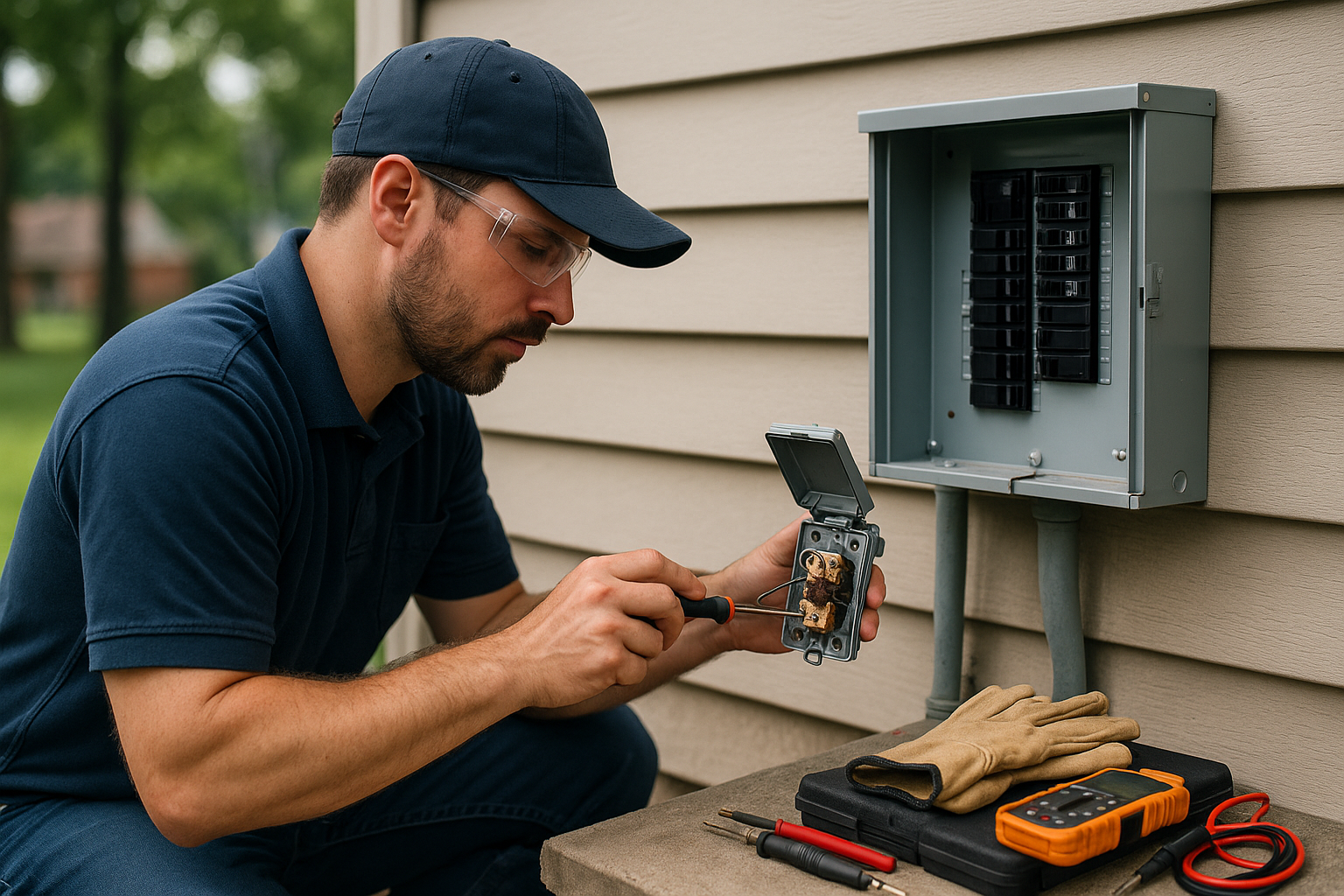
What Causes Outdoor Electrical Outlets to Corrode in Humid Climate
Outdoor electrical outlets corrode in humid climates primarily due to moisture intrusion that triggers metal oxidation. High humidity creates condensation inside outlet boxes, while inadequate weatherproofing allows water penetration, causing metal components to rust and deteriorate over time.
The Science Behind Electrical Corrosion in Humid Environments
Corrosion occurs when metal components react with oxygen and moisture in the air. In humid climates, this process accelerates dramatically because water vapor provides the perfect catalyst for oxidation. Outdoor electrical outlets corrode humid climate conditions create when moisture levels consistently exceed 60%, which is common in areas like Huntsville where summer humidity regularly reaches uncomfortable levels.
The electrical components most susceptible to corrosion include outlet receptacles, wire nuts, junction boxes, and grounding screws. These metal parts begin showing signs of rust within months of exposure to persistent moisture, especially when protective coatings wear down or weatherproofing fails.
Primary Moisture Sources That Damage Outdoor Outlets
Several moisture sources contribute to the corrosion of outdoor electrical systems. Rain represents the most obvious threat, particularly during Huntsville's frequent afternoon thunderstorms that can drive water into poorly sealed outlet boxes. However, humidity poses an equally serious but less visible danger.
Condensation forms inside outlet enclosures when temperature fluctuations cause water vapor to condense on cooler metal surfaces. This process occurs regularly in humid environments, creating persistent dampness that accelerates corrosion even without direct water exposure.
Ground moisture also plays a significant role, especially for outlets mounted on exterior walls near irrigation systems or in areas with poor drainage. Water can wick up through foundation materials or penetrate through small cracks in outlet mounting surfaces.
How Inadequate Weatherproofing Accelerates Corrosion
Proper weatherproofing serves as the primary defense against moisture intrusion, but many outdoor installations lack adequate protection. Standard outlet covers provide minimal protection against driving rain and offer no defense against humidity infiltration.
Outdoor electrical outlets corrode humid climate conditions more rapidly when installations use inappropriate materials or skip essential weatherproofing steps. GFCI outlets without proper weatherproof covers remain vulnerable to moisture penetration through their reset mechanisms and indicator lights.
Gasket deterioration represents another common failure point. Rubber gaskets and seals degrade over time due to UV exposure and temperature cycling, creating gaps that allow moisture entry. Once compromised, these seals actually trap moisture inside outlet boxes, creating ideal conditions for accelerated corrosion.
Material Quality and Installation Factors
The quality of electrical components significantly impacts corrosion resistance. Cheaper outlets often use steel components with minimal protective coatings, while higher-grade products feature brass or stainless steel elements that resist oxidation better.
Installation quality matters equally. Improperly sealed wire entries, loose mounting hardware, and inadequate caulking create pathways for moisture infiltration. Professional electricians understand these vulnerabilities and implement proper sealing techniques during installation.
Location selection also influences corrosion rates. Outlets installed in areas with poor air circulation, such as covered patios or alcoves, experience slower moisture evaporation and higher corrosion rates than those in well-ventilated locations.
Environmental Factors Specific to Humid Regions
Humid climates like Huntsville's present unique challenges for outdoor electrical systems. High year-round humidity means outdoor electrical outlets corrode humid climate conditions persist even during dry periods, preventing complete moisture evaporation from electrical enclosures.
Salt air, while less common in inland areas, can still affect electrical systems through atmospheric transport. Even small amounts of salt accelerate corrosion by making moisture more conductive and aggressive toward metal surfaces.
Temperature cycling between hot days and cooler nights creates expansion and contraction that can compromise seals and create micro-cracks in protective coatings. This thermal stress is particularly problematic in areas like Monte Sano where elevation changes create more pronounced temperature variations.
Prevention and Maintenance Strategies
Preventing corrosion requires a multi-layered approach combining proper materials, installation techniques, and regular maintenance. Weatherproof outlet covers rated for outdoor use provide the first line of defense, while GFCI protection adds safety benefits.
Regular inspection helps identify early signs of moisture intrusion before significant damage occurs. Homeowners should check outlet covers for cracks, ensure gaskets remain flexible, and verify that mounting hardware stays tight.
Professional maintenance includes testing GFCI function, inspecting wire connections for corrosion, and replacing weatherproofing materials as needed. Qualified electricians can identify potential problems before they become safety hazards or require expensive repairs.
When to Call Professional Help
While homeowners can perform basic maintenance, electrical work requires professional expertise for safety and code compliance. Signs that indicate professional attention is needed include visible corrosion on outlet faces, GFCI outlets that won't reset, or any signs of water intrusion in electrical boxes.
Professional electricians can assess the extent of corrosion damage, recommend appropriate replacement materials, and ensure installations meet current electrical codes. They also understand local conditions that affect outdoor electrical outlets corrode humid climate performance and can recommend location-specific solutions.
Frequently Asked Questions
- How quickly do outdoor outlets corrode in humid climates?
- Outdoor outlets can show corrosion signs within 6-12 months in humid climates without proper weatherproofing. Quality materials and professional installation significantly extend lifespan.
- Can I prevent outlet corrosion with better covers?
- Yes, weatherproof covers with proper gaskets dramatically reduce moisture intrusion. However, quality installation and appropriate materials are equally important for long-term protection.
- What are the first signs of outlet corrosion?
- Early signs include discolored outlet faces, sticky or difficult-to-operate covers, rust around screws, and GFCI outlets that trip frequently or won't reset properly.
- Should I replace corroded outlets myself?
- Electrical work should be performed by licensed professionals for safety and code compliance. DIY electrical work can create fire hazards and void insurance coverage.
- How often should outdoor outlets be inspected?
- Inspect outdoor outlets quarterly for signs of moisture intrusion, corrosion, or damage. Annual professional inspection ensures safety and identifies problems before they worsen.
About the author: Kevin Morales, Managing Editor, Huntsville Electrician Specialists. Kevin has spent over a decade researching residential electrical systems and helping homeowners understand complex wiring projects. His background in technical writing and consumer advocacy has given him deep insights into the electrical contracting industry. He's passionate about connecting Huntsville residents with skilled electricians who prioritize both safety and quality craftsmanship.
More electrician guides for Huntsville
Need electrician help in Huntsville?
Get matched with a vetted local pro — free, no obligation.